Nut Materials, Explained: Why This Small Part Matters So Much
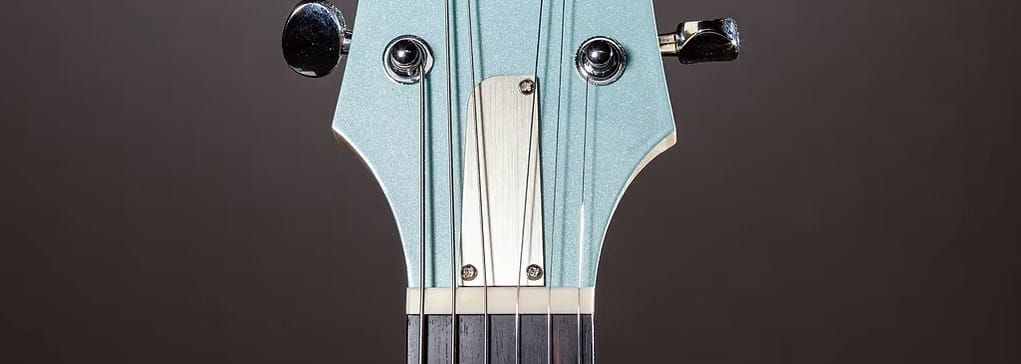
In our earlier piece, Reading a Guitar Spec Sheet: What the Terms Actually Mean, we walked through the core terms you'll find on a hand-built guitar's spec sheet — including the nut, the small component where the neck meets the headstock. We explained what it is. This time, we're going deeper into what it's made of, because the nut is one of the few specs where the material choice has a direct, easily understood effect on how a guitar plays.
Every string passes over the nut before it reaches the tuners. That means the nut affects tuning stability, how strings behave during bends and vibrato, and — depending on who you ask — a bit of the guitar's tone as well.
Bone
Bone is the traditional choice, and it's still favored by many builders and players today. It's dense, but because it's an organic material, its density varies slightly from piece to piece. Many players feel this gives a fuller, more resonant tone with good sustain. The trade-off: over time, heavy bending or vibrato use can wear grooves into a bone nut, which may eventually cause strings to bind instead of sliding smoothly.
Graphite
Graphite is self-lubricating, meaning strings slide through the grooves with less friction. This makes a real difference on guitars with a vibrato system, since smoother string movement helps the strings return to pitch instead of catching and going sharp or flat. Graphite is also far more consistent than bone, since it's a manufactured material rather than an organic one. Some players feel it sounds slightly less lively than bone, though this difference is subtle and often debated.
Synthetic Bone Substitutes
Materials like Corian or Micarta are engineered to imitate bone's density and tonal character while offering more manufacturing consistency, and often at a lower cost. Quality varies significantly between brands and formulations — some synthetic substitutes perform very close to bone, while others are considered budget compromises.
Brass and Metal
Metal nuts are denser and harder than bone or synthetic alternatives, and they're often associated with a brighter, more cutting tone and extra sustain. Without proper lubrication, metal is more prone to causing strings to bind at the nut. Some players also find metal adds more brightness than they want. You'll see metal nuts more often on vintage-style or specialty builds than as a default choice.
Plastic
Plastic is the cheapest and most common nut material on mass-produced, entry-level guitars. It's softer than bone, graphite, or metal, wears down faster, and is generally considered to dampen tone and sustain by comparison. It's rarely a hand-builder's material of choice, except in very budget-conscious builds.
Locking Nuts: A Different Approach Entirely
Locking nuts aren't a material — they're a mechanism. Instead of strings resting in grooves, a locking nut clamps the strings in place, usually paired with a locking vibrato system. This trades some of the convenience of tuning by hand for excellent tuning stability during heavy vibrato use. With a locking nut, the material question becomes secondary to the locking function itself.
Next time you see "Nut: Graphite" or "Nut: Bone" on a spec sheet, it's not a small detail to skim past — it's one of the more practical choices a builder makes, with a direct effect on how the instrument plays night after night.
Picture source: The UMA Jetson